
What To Do If You See an Uncontrolled Fire Starting

This is shaping up to be a potentially serious wildfire year, with conditions that could support rapid fire growth and extreme fire behavior. Our fuels are dry, and we still have cured grasses from last year that should have started their decomposition process but are still standing up because there hasn’t been enough snow to lay them down. We would like YOU to take an active role in preparing yourself and your family for the possibility of a wildfire, and to organize as neighbors.
We will have a great presentation by the Boulder County Office of Disaster Management (ODM) later this month to teach our residents about emergency alerting and evacuation preparedness. In the event of a disaster or any other significant event (active shooter in the area, etc.), Boulder County 911 Dispatch needs to be able to alert you, and you need to be able to get to a safe location. Most commonly for us that is during a nearby wildland fire. Today I would like to talk about what to do when you see a fire or have accidentally started one. Wildfires can escalate, shift direction, and outrun people with frightening speed. If you spot a wildland fire starting, your first priority should be to call 911, report the fire, and immediately move to a safe location.
One dangerous pattern we continue to see is people remaining uphill or near a fire after reporting it. Even more concerning are bystanders who stop to watch, take photos, or “gawk” without being involved in the emergency response. This creates serious safety hazards for both the public and firefighters.
When fire crews arrive with multiple engines and emergency vehicles, we need clear access to the scene. People walking through the area or vehicles blocking roads and turnarounds can significantly delay emergency operations. In the fire service, we call this “clogging up a scene,” and it makes our job much harder — and far more dangerous for everyone involved.

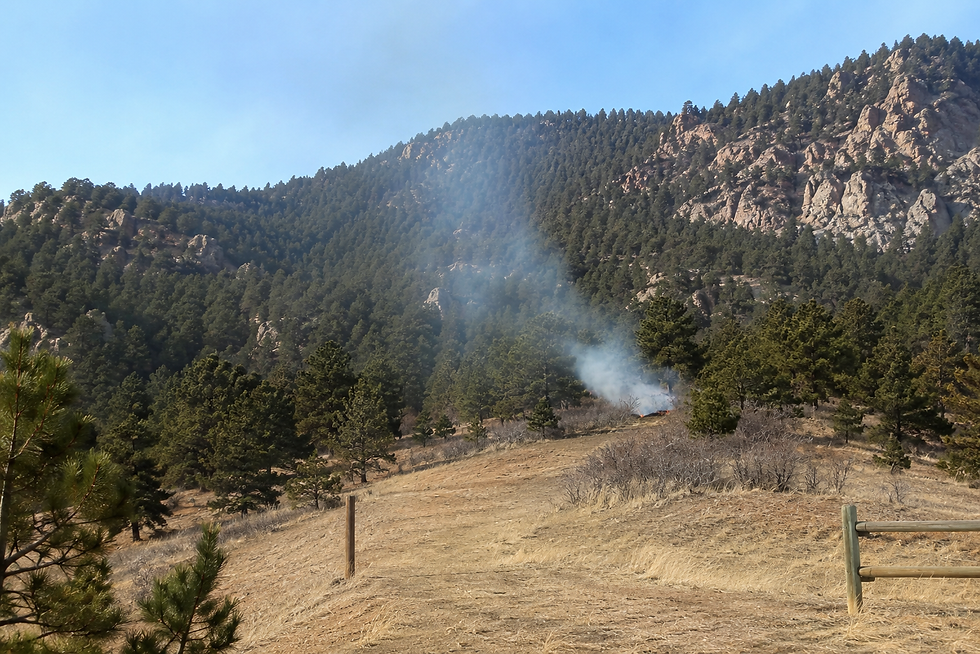
This incident highlights how quickly parked vehicles and bystanders can limit access for emergency responders. Fire crews need room for engines, water tenders, and personnel to move safely and efficiently — especially if a small fire begins to grow rapidly. If this were an escalating fire it would have been a difficult scene to introduce any more firetrucks and personnel into (tenders, portable ponds, etc.). A similar situation occurred during the December 20th, 2025 fire in our canyon, with way too many civilians in the area with their cars, and putting themselves at risk by standing near the high voltage line and a nearby guardrail (Power Line safety post is coming soon!).
Once a fire has been reported, the safest and most helpful action is to leave the area with your vehicle. Clearing access routes can directly improve emergency response and firefighter safety.
Here is exactly what you should do:
1. Call 911 Immediately
Never assume someone else has already reported the fire. Dispatchers need as much information as possible to deploy the right resources. Be prepared to provide:
Precise Location: Give GPS coordinates from your phone if possible. Otherwise, provide mile markers, intersecting roads, trail names, or prominent landmarks. We often get smoke reports and it is unclear that the person is looking at a smoke column 9 miles to the south of Sunshine behind the Flatirons. If you can be precise, that is immensely helpful. I am happy to meet with you in person to give you a map training for the area that can help you identify specific locations, which has a tremendous effect on the speed at which the initial fire can be suppressed.
Fire Details: Note the estimated size (e.g., the size of a car, a house, or a football field) and what is actively burning (grass, brush, or timber).
Fire Behavior: Describe the wind direction and how quickly the fire appears to be spreading. Although, your wind in a spot in Sunshine is likely different from the wind on Logan Mill.
Smoke Color: Mention the color of the smoke (e.g., white, light brown, or thick black), as this helps responders gauge what is burning and how hot the fire is.
Access: If possible, note the best access route for heavy emergency vehicles. This is where local knowledge can make a huge difference. In some situations, firefighters may ask Dispatch for your phone number so we can contact you directly and confirm exactly what you saw and where you saw it.
If you are in a safe location, still have visual contact with the fire area, and have cell reception, please remain available for a callback. If you witness an incident, please contact the Boulder County Sheriff’s non-emergency line at 303-441-4444 in case follow-up information is needed. Also remember: just because the smoke disappears does not necessarily mean the fire is out. Fires can temporarily quiet down when they mo ve into areas with less available fuel, only to flare back up again moments later.
2. Prioritize Your Safety and Evacuate
Do not stick around to take photos or watch the fire develop. Move away from the area immediately. This of course is different if you can stay in that safe area because you can see the fire from a distance. The understanding of that distance is of course relative.
Move Upwind and Downhill: Fire travels much faster uphill because the heat pre-bakes the fuels above it. Always try to move downhill and upwind of the blaze.
Avoid "Chimneys": Stay out of narrow canyons, chutes, or saddles. These topographical features can funnel heat and wind, causing the fire to surge upward unpredictably.
Stay Clear of Smoke: Wildfire smoke is toxic and disorienting. If you must move through smoke, keep low to the ground and cover your nose and mouth with a cloth (preferably damp).
3. Warn Others in the Area
If there are hikers, campers, or residents in the immediate vicinity, alert them to the danger as you evacuate. Honk your car horn repeatedly or shout to raise the alarm, but do not delay your own escape to search for people.
4. Do Not Attempt to Fight It
Unless the fire is no larger than a small campfire and you have a shovel and abundant water or dirt immediately at hand, do not try to extinguish it yourself. Without proper personal protective equipment (PPE), training and escape routes, attempting to fight a wildland fire is incredibly dangerous. Leave the suppression to the professionals.
Always let us know if you have any questions. We look forward to seeing you at the ODM presentation later this month. Thank you.
Chief Michael Schmitt


Comments